Here, we guide you on what flexographic label printing is to give an introduction to long-run printing, to help clients on what label printing method is best for your business.
What Is Flexographic print?
Over the years, with technological innovations it's still one of the most trusted ways to manufacture large volumes of custom labels at high speeds.
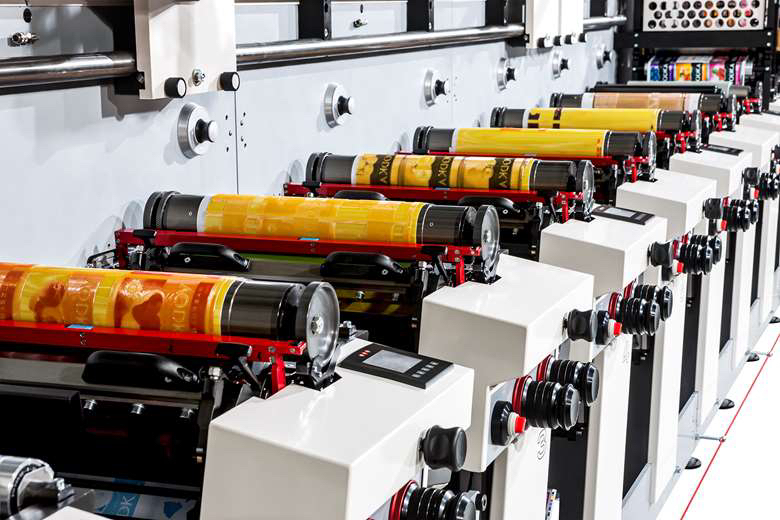
Today the photopolymer print plates that were once made of rubber, are wrapped around a rotating cylinder of the printing press.
The inked plates have an embossed image with colours separated onto different stations and rotate at high speeds to transfer the ink through small holes from the anilox roll to the label material.
Flexo printing is unique because it adapts well to different materials such as thin white and clear films, paper, card, flexible packaging and is compatible with a range of inks, including water-based inks and special UV inks. Because this type of printing holds up and is adaptable, it can be printed on almost any kind of substrate whether plastic or paper.
Flexographic printing advantages:
- It runs at extremely high speeds and is ideally suited for long label runs.
- Prints on a wide variety of materials.
- Consistent print guarantees it's high-quality output.
- Low cost maintenance.
- With plate setting technology, extra labels are easy to reproduce.
Flexographic printing disadvantages:
- The price of flexo printing plates is relatively high, but they can last for hundreds of reprints.
- Small and variable artwork changes are time-consuming to make.
Will it benefit you?
At Paramount Labels, our experience at flexographic printing is one of our special talents. We've cut costs on large label orders for some of the countries biggest household brands and products. It's just one of the ways we continue to help customers understand the ever changing print technology requirements to get the more for their money.
Contact our team and join the companies getting the benefits from our flexo labelling.