How Packaging Labels Influence A Circular Economy:
25th May 2021
In Germany, the government has passed an amendment to the Packaging Act with the likelihood of it becoming a standard of Europe – but what does this mean for labels?
This amendment comes with added focus on the expansion of the recycling deposit system - for example: PET and glass containers.
In addition to manufacturers and their waste, owners of restaurants and retailers will also have to offer reusable alternatives to their customers (instead of single-use plastic packaging) from 2023 when selling food and beverages for immediate consumption.
For the retailers, this means that from 2022 there will be a deposit on all non-returnable plastic bottles as well as cans. The amendment to the law is said to end the previous exemptions for some products. As a transition period could apply to milk and other dairy packaging until 2024.
How Do Labels Influence This?
It will be a matter of recycling more, which involves separating labels from PET and glass – which aims to increase ‘bottle-to-bottle recycling’.
Here the material from which the labels are made makes a huge difference in the recycling process.
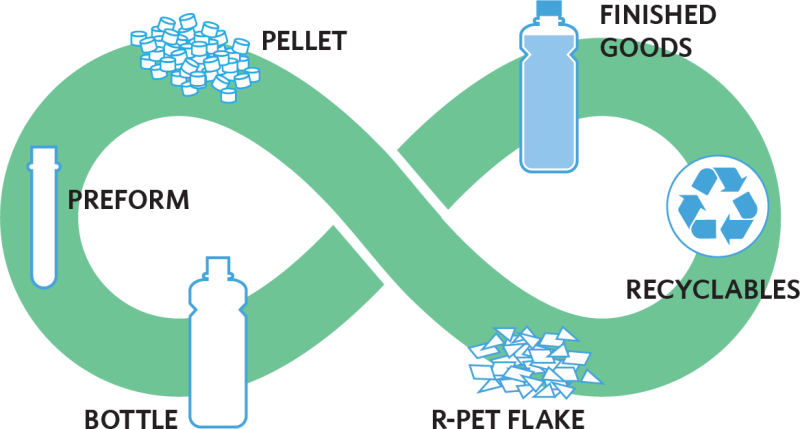
PET bottles are shredded in the recycling plants, where the label is separated from the bottle when it enters a ‘sink or float’ process...
Ideally, the label material floats on top of the water basin thanks to its low density, while the heavier PET flakes collect cleanly on the bottom of the basin.
The results are clean, separated PET flakes that can be reused for high-quality bottles to enable an increase of recyclability in packaging.
That’s why it’s important that specially engineered label materials come off easily in the basin (whilst ink and adhesive remain on the label) and do not contaminate the washing water or the plastic.
By 2025, the share of recycled in PET bottles should be increased by at least 30 percent.
Example of Circular Economy:
In May 2021, Japanese beer group giant Asahi launched new bottles in Europe for Czech brand; Pilsner Urquell. These bottles now feature 100% recyclable paper labels.
Asahi removed all the plastic and aluminium materials from the Pilsner Urquell packaging labels and with this subtle change, they estimate savings of 48.4 tons of aluminium foil per year, which is the weight of about 26 cars or 820 kegs of beer.
Expansion of the Circular Economy:
The choice of the right label is also crucial for bottles that can be filled several times. In many cases, the leading cosmetics companies have also already begun the return and refill process.
Labels with ‘Wash Off’ adhesive technology are ideal for glass containers, as they can be removed easily and residue-free in conventional industrial washing machines. At the same time, like biodegradable labels, the labels shrink minimising the waste volume.
There are compatible labels with recycled materials available. At Paramount Labels our highly receptive label materials can be made from post-consumer recycling or feature wash off adhesives, offer a lower carbon footprint and a smoother recycling process.
Back to News